Tired of constant background noise drowning out your favorite playlist or podcast during a commute, flight, or workday?
Whether it’s the roar of traffic, office chatter, or airplane engines, many people turn to headphones for relief, but not all noise-blocking tech is created equal.
Active Noise Cancellation (ANC) uses electronic wizardry to counteract unwanted sounds, while Passive Isolation relies on physical design to seal them out – understanding the difference can help you pick the right gear without wasting money on overhyped features.
Active Noise Cancellation vs. Passive Isolation
ANC and Passive Isolation tackle noise in fundamentally different ways, each with unique strengths and trade-offs. Think of Passive Isolation like stuffing cotton in your ears or covering them with your hands – it creates a simple wall that stops sound from getting in.
ANC, on the other hand, is like having a smart friend who hears the noise and shouts back the exact opposite to make it disappear. ANC is active because it needs power and tech to work, while Passive Isolation is just about the build and fit, no batteries required.
ANC does a great job on low, steady sounds like the hum of a fan or a bus engine, cutting them down by up to 60 decibels in the best cases. It adapts to your surroundings using tiny microphones, but it uses up battery life – often shortening playtime by 20 to 50 percent. Passive Isolation shines on higher sounds, like people talking or keys tapping, blocking 15 to 40 decibels without any power drain. It’s cheaper too: You can get good Passive Isolation headphones for $50 to $100, but ANC starts at $150 and goes up, thanks to the extra parts. For example, turning on ANC in a pair like the Sony WH-1000XM6 might drop your battery from 60 hours to 30.
If you travel a lot on planes or trains where low rumbles never stop, you need ANC. If you want pure sound without extra noise from tech and you’re on a budget, get Passive Isolation. It’s honest: ANC feels modern and helpful, but Passive keeps things simple and reliable.
The Deep Dive: How It Actually Works
Sound moves through the air like ripples in water, and both methods stop those ripples from hitting your ears. But they do it in very different styles. Let’s break it down with easy examples.
Passive Isolation Mechanics
Passive Isolation is all about building a strong barrier. Imagine wearing earmuffs at a construction site – they don’t fight the noise; they just keep it out. Over-ear headphones use soft cushions that wrap around your ears, creating a seal with materials like foam or leather. In-ear buds push silicone or foam tips right into your ear canal, blocking the path for sound waves. This works best for sounds above 500 Hertz, like a friend’s voice or a door slam, reducing them by 15 to 30 decibels. Picture this scenario: You’re at a coffee shop, and the barista’s machine grinds beans loudly. With good Passive Isolation, that sharp noise fades because the seal absorbs or bounces it back.
But here’s the catch – it only works if the fit is perfect. If the seal breaks, like if your ears are sweaty or the tips are the wrong size, noise leaks in and cuts the effect in half. No power means you can use it forever, but low, deep sounds like thunder rolling through because its long waves are tough to stop with just a wall.
Active Noise Cancellation Mechanics
ANC takes a smarter approach. It’s like a noise detective: Tiny microphones on the headphones listen to the outside world, then a small computer inside flips the sound wave upside down and plays it back through the speakers. When the flipped wave meets the real one, they crash and cancel each other out – that’s called destructive interference. It targets low sounds under 1,000 Hertz, like a vacuum cleaner or car engine, dropping them by 20 to 40 decibels on average.
Here’s a visual of the ANC process in action:
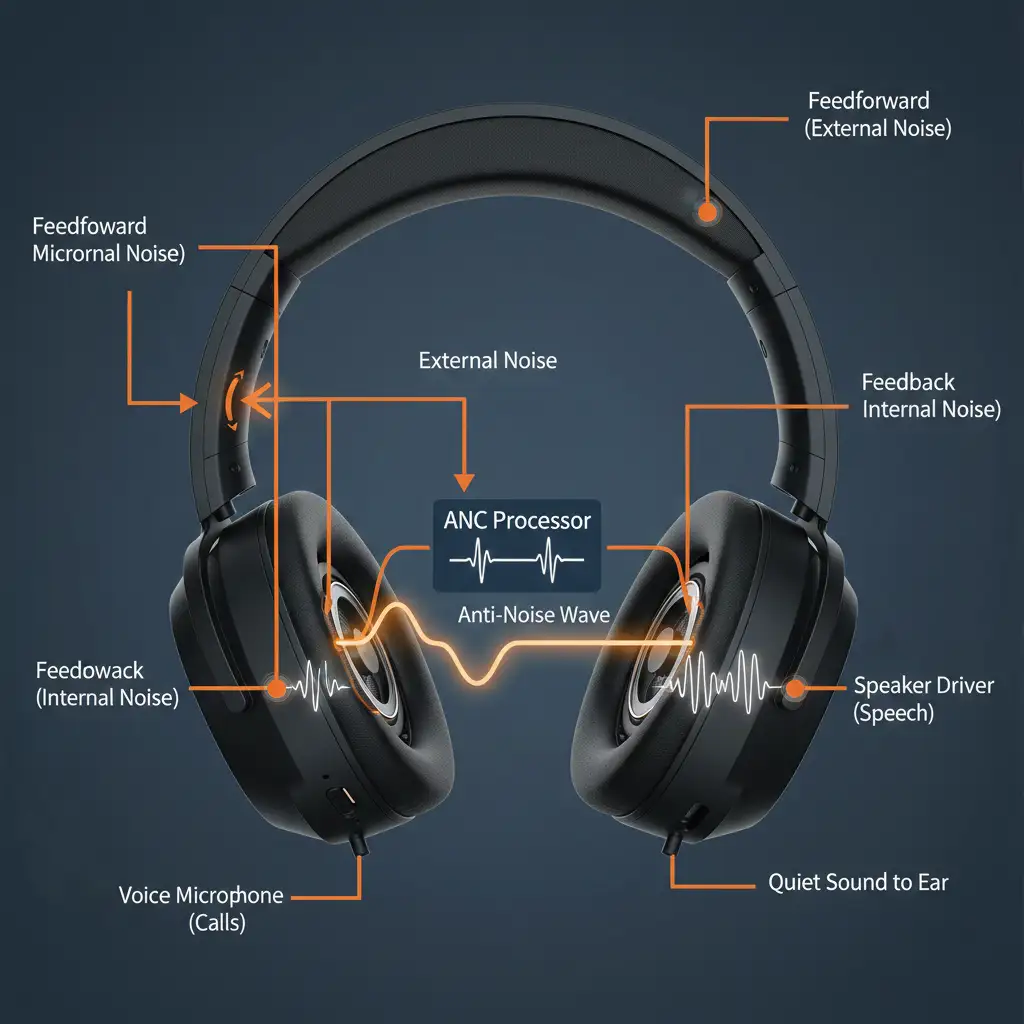
Think of a scenario where you’re on a long bus ride, and the engine drones on. ANC spots that steady hum, create the anti-hum, and poof quiet. Newer types use both outside and inside mics for even better results. But it can feel odd, like pressure in your ears, and sometimes adds a soft hiss. Plus, it needs batteries, so if they die, you’re left with just the basic seal.
Combining Both: Hybrid Approaches
The best headphones mix ANC and Passive Isolation for full protection. It’s like having a wall and a guard at the door. Thick padding blocks high notes, while ANC handles the lows, giving up to 50 decibels of quiet in total. In a busy airport, hybrid gear lets you hear your music clearly over announcements and engines. Frequency charts show this clearly: Passive takes the highs, ANC the lows. This combo costs more and uses power, but for most people, it’s worth it.
Real World Test: Scenario Tests – Airplane vs. Office vs. Street
Noise changes with where you are, so let’s see how each tech holds up in daily life, based on real tests and user stories.
Airplane Travel
On a plane, the engine roar is a constant low buzz that can make your head ache. ANC is your hero here, wiping out 30 to 60 decibels of that drone so you feel like you’re in a calm room. Imagine settling into your seat for a cross-country flight: With ANC on, you watch a movie without cranking the volume, and even nap through turbulence. Passive Isolation helps with passenger talk but can’t touch the deep rumble, so you end up turning up the sound, which tires your ears. Hybrids like the Sony WH-1000XM6 block 28 to 40 decibels across everything, turning flights into peaceful times.
Office Environments
In an office, it’s all about voices, phones ringing, and keyboard clicks— mostly mid-range sounds. Passive Isolation wins big, sealing out 15 to 30 decibels so you focus on work like you’re alone. Picture this: Your desk is near a chatty group. With Passive in-ears, their words fade to a mumble, letting you code or write without breaks. ANC deals with air conditioning hum but doesn’t fully stop sudden laughs or calls. Still, in open spaces, ANC boosts your output by cutting overall distractions. For ignoring people, go with Passive like Etymotics—they create a tight bubble for highs.
Street and Commuting
Walking or riding in the city means mixed noise: Car horns (high), traffic growl (low), and crowds. ANC tames the road rumble by 20 to 40 decibels, keeping you safe by letting you hear music softly. Scenario: You’re biking through traffic. ANC quiets the engines so you spot bikes or shouts more easily. Passive handles horns and yells well, but lets bass through. For urban mix, hybrids cut fatigue by half during long commutes. Over-ears with strong seals, like Bose, work great for streets without blocking too much awareness.
Picking the wrong one means ongoing irritation or louder volumes, which can harm your hearing over the years.
The Buying Guide: What Should You Buy?
Your choice depends on your daily routine, money, and what noise bugs you most. Here’s clear advice with top picks for 2026.
If you fly or commute with low sounds, get ANC hybrids. The Sony WH-1000XM6 at $350 gives amazing ANC for 50 hours with it on, plus great sound and comfy seals. For buds, Bose QuietComfort Ultra (2nd Gen) at $299 crushes airplane noise at 28.7 decibels with foam for Passive.
On a budget or facing high noises like offices? Choose Passive-focused. Anker Soundcore Liberty 5 for $100 mixes okay ANC with solid seals. Pure Passive? Etymotic ER series at $150 blocks 40 decibels of highs, no power needed.
Apple users: AirPods Pro 3 at $249 with hybrid ANC and tips. Top premium: Technics EAH-AZ100 buds at $300 for wide ANC.
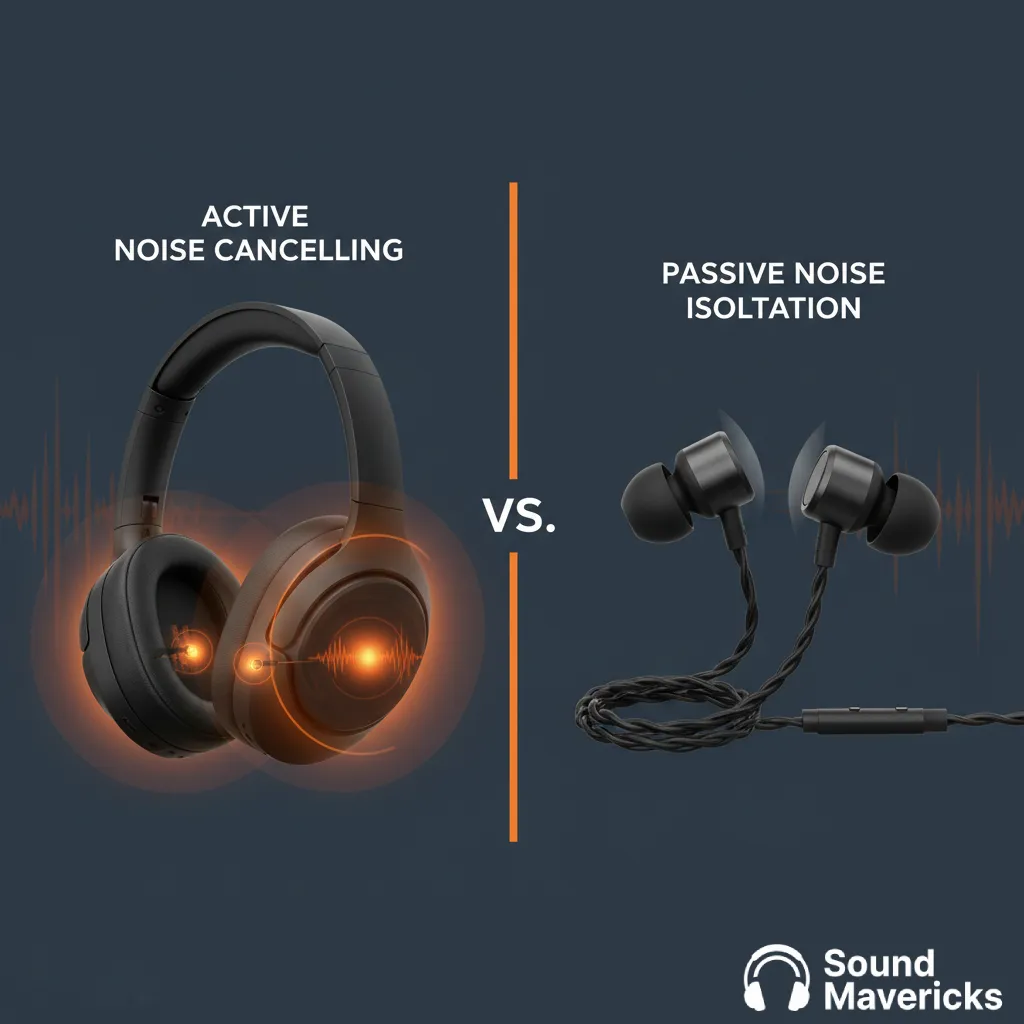
Test fits in stores and use apps to tweak— hybrids fit most, but Passive saves cash for light use.
FAQs
Yes, for low-noise spots like travel, but Passive works fine for highs and costs less with no battery issues.
It might add a tiny buzz, but good ones fix that; no harm to ears, though some feel pressure— Passive gives cleaner audio.
Yes— tight Passive in-ears match ANC in many cases, especially away from deep sounds.

I am the founder of Sound Mavericks, where I provide the polite truth about audio equipment. I started this site because consumer electronics reviews are often too technical. Instead of using a silent lab, I test headphones, earbuds, and Bluetooth speakers in the real world – like on a noisy subway or in a busy coffee shop.
To stay independent, I buy my own review units (mostly from the United States) rather than accepting free gifts from brands. Once I finish testing a product, I sell it locally to our community. My goal is to help you understand sound quality, active noise cancellation (ANC), and battery life without the marketing hype.