Last updated: October 10, 2026
Quick navigation
- Why these seven
- Best overall: Soundcore Space Q45
- Best ANC value: Sony WH-CH720N
- Best battery life: JBL Tune 770NC
- Best sound value: Sennheiser Accentum
- Best wired studio pick: Audio-Technica ATH-M50x
- Best open-back: Sennheiser HD 560S
- Best flagship-value: Nothing Headphone (1)
- Compare all seven
- Notable mentions
- What to look for
- How we scored
- FAQ
- Changelog
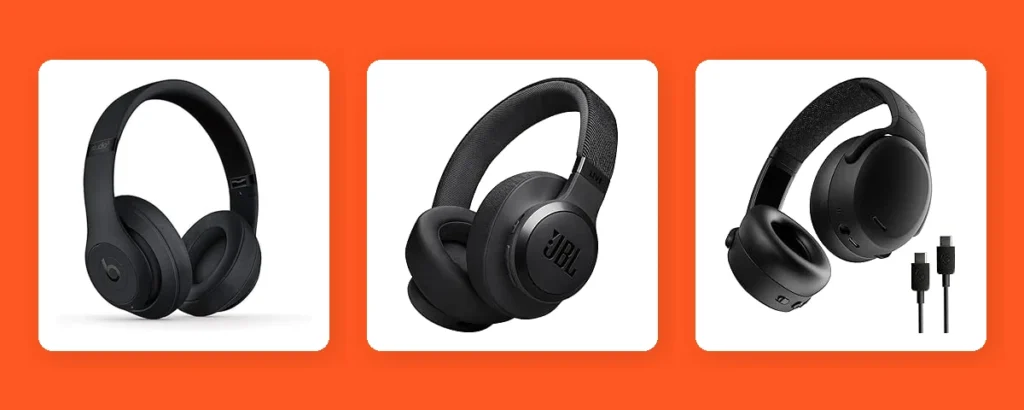
Affordable over-ear headphones live in the headphone market’s sweet spot — a step above the cheapest tier, which our best budget over-ear headphones guide covers. “Affordable” is where you get most of what flagships offer: genuinely effective noise cancelling, hi-res wireless codecs like LDAC, multipoint pairing, and multi-day batteries — without paying for brand prestige or features you’ll never use.
SoundMavericks compared more than 45 current over-ear models above the budget tier, weighing verified listing specifications against real-world reputation, feature completeness, and long-term owner feedback. The seven below are the ones we’d spend our own money on — true over-ear designs with verifiable listings, ranked by overall value with honest notes on where each falls short.
Why these seven: every pick is a genuine over-ear, currently sold and verifiable, sitting in the value tier above the cheapest options. Popular look-alikes like the JBL Tune 520BT and Sony WH-CH520 were deliberately excluded — both are on-ear, not over-ear. Two picks (the Sony WH-CH720N and Audio-Technica ATH-M50x) also appear in our sibling budget guide; here they’re joined by models the budget tier can’t reach. For more closed-back context, see our best closed-back headphones roundup.
Best overall: Anker Soundcore Space Q45

| Sound Quality | 9.2 |
| Noise Cancelling | 9.0 |
| Comfort & Design | 8.8 |
| Battery Life | 9.8 |
| Features | 9.3 |
| Value | 9.5 |
The Space Q45 is the affordable-tier headphone that made flagships nervous. Anker’s spec sheet lists adaptive noise cancelling, LDAC hi-res wireless audio, Bluetooth 5.3 with multipoint, and a soundcore app with 22 EQ presets plus customizable transparency levels. Battery life is the headline: 50 hours with ANC on, 65 with it off — charge it a couple of times a month and forget it exists.
SoundMavericks’ take: this is the default answer when someone asks for the best affordable over-ears and doesn’t want to overthink it. The adaptive ANC handles the low-frequency drone of planes and trains plus a respectable share of mid-band chatter, and LDAC means Android users with hi-res streaming actually benefit. Weaknesses: merely decent call quality and a plastic-forward build. Neither disqualifies it. Key specs: adaptive ANC, 40mm drivers, LDAC + Bluetooth 5.3 with multipoint, 50/65-hour battery, ~10.4 oz, USB-C + 3.5mm cable and hard case included.
- Buy if: you want flagship-tier features — adaptive ANC, LDAC, multipoint, marathon battery — at a non-flagship price.
- Skip if: you take constant calls in windy conditions; the mic array is the one area that feels its price.
Best ANC value: Sony WH-CH720N

| Sound Quality | 8.8 |
| Noise Cancelling | 9.2 |
| Comfort & Design | 9.4 |
| Battery Life | 8.8 |
| Call Quality | 8.6 |
| Value | 9.3 |
Sony’s mid-range over-ear is the ANC-value king because it borrows from the flagship playbook without the flagship price. The CH720N packs digital noise cancelling, DSEE upscaling for compressed audio, and multipoint Bluetooth — in what Sony calls its lightest wireless noise-canceling headband design, which matters on long travel days. A 35-hour battery with ANC on covers a week of commutes.
SoundMavericks’ take: if noise cancelling is your first priority and your budget stops below the WH-1000XM tier, this is the end of the search. It consistently rates above the Q45 for pure ANC performance, with refined Sony tuning and better call handling — read our full Sony WH-CH720N review for the deep dive. Tradeoffs: no LDAC and a smaller app feature set. It also appears in our best noise cancelling headphones under 100 roundup as the model budget ANC is measured against. Key specs: digital ANC, 30mm drivers, DSEE, Bluetooth 5.2 with multipoint, 35-hour ANC battery, 192g, 3.5mm cable included.
- Buy if: noise cancelling is the feature you care about most, or you want the lightest long-wear option here.
- Skip if: you need LDAC or you want the marathon battery and bigger app of the Space Q45.
Best battery life: JBL Tune 770NC

| Sound Quality | 8.3 |
| Noise Cancelling | 8.4 |
| Comfort & Design | 8.7 |
| Battery Life | 10.0 |
| Features | 8.5 |
| Value | 9.0 |
The Tune 770NC’s headline number is up to 70 hours of listening time — the longest battery on this list and roughly double what most ANC over-ears manage. Around it, JBL wraps adaptive noise cancelling, Smart Ambient passthrough, multipoint Bluetooth 5.3, and the JBL app with customizable EQ into a lightweight 232g foldable frame with fast charging.
SoundMavericks’ take: this is the pick for people who hate chargers — frequent travelers, shift workers, anyone who wants to charge roughly once a month. It’s a clear step up from the well-regarded JBL Tune 720BT, adding adaptive ANC and Smart Ambient while keeping the Tune line’s comfortable fit and punchy JBL tuning. Tradeoff: the ANC is good but not Sony-class, and the bass-forward tuning favors pop, hip-hop, and podcasts over analytical listening. Key specs: adaptive ANC, 32mm drivers, Smart Ambient, Bluetooth 5.3 with multipoint, 70-hour battery, 232g, foldable, USB-C + audio cable included.
- Buy if: battery life is your obsession, or you want punchy JBL tuning with real ANC on the side.
- Skip if: you need top-tier noise cancelling or neutral studio tuning — look at the Sony or the wired picks instead.
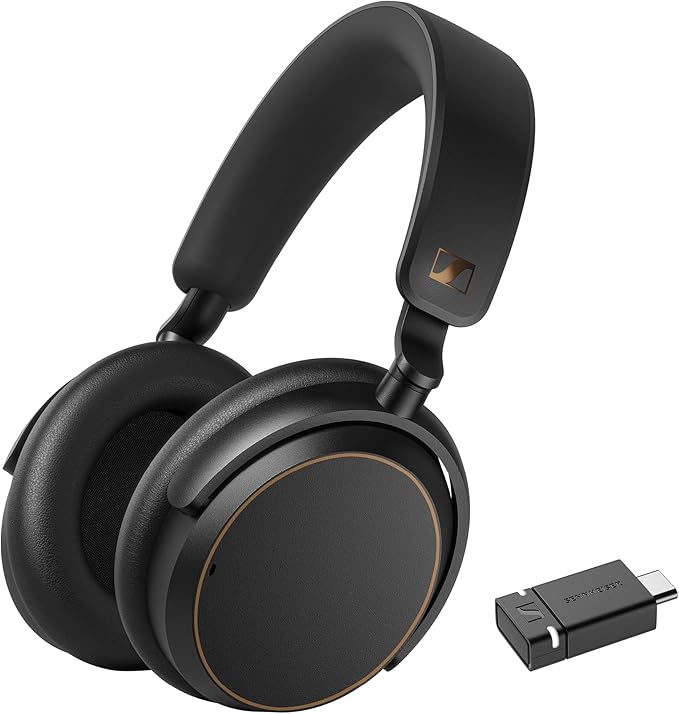
Best sound value: Sennheiser Accentum Wireless
| Sound Quality | 9.3 |
| Noise Cancelling | 8.4 |
| Comfort & Design | 9.0 |
| Battery Life | 9.2 |
| Features | 8.6 |
| Value | 9.1 |
The Accentum is Sennheiser’s answer to the question “what if the Momentum 4’s sound cost less?” It carries the Sennheiser tuning philosophy — balanced, detailed, with bass that has presence without swallowing the mids — plus hybrid ANC, a 50-hour battery, aptX Bluetooth support, and the Smart Control app’s sound personalization.
SoundMavericks’ take: if your ranking puts sound quality first and ANC second, the Accentum beats both the Sony and the Anker on pure tuning refinement. Voices and acoustic instruments carry the texture Sennheiser is known for. The ANC is competent rather than class-leading, and there’s no LDAC for Android hi-res sticklers — but comfort is a genuine strength for long sessions. Key specs: hybrid ANC, aptX + Bluetooth 5.2, 50-hour battery, Smart Control app with sound personalization, ~222g, USB-C audio + 3.5mm cable.
- Buy if: sound quality is your top criterion and you trust Sennheiser’s tuning heritage.
- Skip if: maximum noise cancelling matters more than tonal refinement — the Sony wins that fight.
Best wired studio pick: Audio-Technica ATH-M50x

| Sound Quality | 9.4 |
| Comfort & Design | 8.4 |
| Build Quality | 9.0 |
| Features | 7.5 |
| Value | 9.2 |
The ATH-M50x needs no introduction — it’s the best-selling studio headphone of the last decade for a reason. Proprietary 45mm large-aperture drivers deliver the punchy, detailed monitor sound that engineers mix on. The 90-degree swiveling earcups, robust folding build, and three detachable cables (including coiled) make it a workhorse for home studio, desk listening, tracking, and DJ use.
SoundMavericks’ take: wireless features are wonderful, but they cost money that doesn’t go into the drivers. At this price, no Bluetooth headphone sounds as good per dollar as the M50x — that’s the whole argument for a wired pick on this list, and it’s why the M50x also anchors our best closed-back headphones coverage. Honest caveats: the clamp is firm out of the box (it loosens), the pads can get warm, and the tuning leans slightly V-shaped — a fun monitor, not a reference tool. Key specs: 45mm drivers, 38-ohm impedance (drives fine from a phone), detachable cables, 90° swiveling cups, 285g.
- Buy if: sound per dollar is what you maximize — studio work, desk listening, or just honest sound.
- Skip if: you need wireless, ANC, or call features; this is a purpose-built wired headphone.
Best open-back: Sennheiser HD 560S

| Sound Quality | 9.5 |
| Comfort & Design | 8.6 |
| Build Quality | 8.0 |
| Features | 7.0 |
| Value | 9.0 |
The HD 560S is the affordable audiophile’s rite of passage. Open-back earcups let the 38mm drivers breathe, producing the wide, natural soundstage that closed headphones physically can’t — Sennheiser’s E.A.R. (Ergonomic Acoustic Refinement) design angles the drivers to match your ear’s natural position. Frequency response runs 6 to 38,000 Hz, with neutral tuning and extended bass for an open-back.
SoundMavericks’ take: for home listening, this is the best sound on this list full stop — more detailed and more spacious than anything wireless here. The tradeoffs are structural: open-backs leak sound both ways, so everyone near you hears your music and you hear everything around you. That rules out commuting, offices, and libraries — this is a living-room and bedroom headphone. The 120-ohm impedance plays fine from a laptop but opens up with even a basic DAC/amp. Velour pads and a light clamp keep it comfortable for hours despite the utilitarian plastic build. Key specs: open-back, 38mm drivers, 6–38,000 Hz, 120-ohm impedance, detachable cable with 6.3mm jack + 3.5mm adapter, ~240g.
- Buy if: you listen at home and want the most detailed, spacious sound this money can buy.
- Skip if: you need isolation or privacy — open-backs leak, and there’s no fixing that.
Best flagship-value: Nothing Headphone (1)

| Sound Quality | 8.6 |
| Noise Cancelling | 8.3 |
| Comfort & Design | 8.8 |
| Battery Life | 9.0 |
| Features | 8.4 |
| Value | 8.7 |
Nothing’s first over-ear is the wildcard pick — and the most interesting new design in this tier. Hybrid ANC sits alongside hi-res wireless audio, a KEF-tuned 40mm driver, six microphones, and up to 80 hours of playback with ANC off, in Nothing’s transparent design with physical controls.
SoundMavericks’ take: this is the “stretch” pick for readers at the top of the affordable tier who want something that feels premium without the premium badge. The KEF collaboration gives it a more considered sound signature than most newcomers manage, and the 6-mic array makes it a solid call headphone. It’s also the newest and least-proven pick here: long-term durability data doesn’t exist yet, and the app is thinner than Sony’s or Anker’s. The launch reception has been genuinely strong — but if you value proven longevity, the Sony or Anker above are safer bets. Key specs: hybrid ANC, KEF-tuned 40mm driver, hi-res wireless audio, 6-mic array, spatial sound, up to 80-hour battery (ANC off), fast charging, ~329g.
- Buy if: you want flagship-style design and a complete feature set at the top of the affordable tier.
- Skip if: you prefer proven long-term reliability — this one’s the newest pick on the list.
Compare all seven
| Model | Best for | ANC | Battery | Key strength |
|---|---|---|---|---|
| Soundcore Space Q45 | Overall | Adaptive | 50h ANC / 65h off | LDAC + 22-preset EQ app |
| Sony WH-CH720N | ANC value | Digital ANC | 35h ANC | Lightest at 192g |
| JBL Tune 770NC | Battery life | Adaptive | Up to 70h | Smart Ambient mode |
| Sennheiser Accentum | Sound value | Hybrid | 50h | Sennheiser tuning + aptX |
| Audio-Technica ATH-M50x | Wired studio | — (passive) | Wired | Best sound per dollar |
| Sennheiser HD 560S | Open-back | — (open) | Wired | Widest soundstage here |
| Nothing Headphone (1) | Flagship-value | Hybrid | Up to 80h (ANC off) | KEF-tuned, 6-mic calls |
Notable mentions
Three models came close but missed the final seven. The Soundcore Space One is fine, but the Q45 does everything it does slightly better — buy the Q45. The Sony ULT Wear is a bass-head alternative with serious ANC, but its tuning is narrower in appeal than the CH720N’s. And the Audio-Technica ATH-M40x is arguably the flatter studio pick than the M50x — but its drier tuning is less fun for everyday listening. If pure noise cancelling on a tight ceiling is the goal, our best budget noise cancelling headphones under 100 guide has the cheapest options that still cancel well.
What to look for in affordable over-ear headphones
Noise cancelling tier. “ANC” covers a wide range. Basic ANC handles low drone; hybrid and adaptive systems (Q45, 770NC) add feedforward mics that adapt to your environment. If you fly or commute daily, adaptive is worth the step up.
Codecs. LDAC (Q45) and aptX (Accentum) deliver higher-bitrate wireless audio — but only if your phone supports them (most Android phones do; iPhones stick to AAC) and you stream hi-res sources. Otherwise, standard codecs shouldn’t decide anything.
Closed vs. open. Five of our seven picks are closed-back: they isolate you and keep your music private. The HD 560S is open-back — wider, more natural sound, but sound leaks in and out. Choose based on where you listen, not which sounds better in the abstract.
Battery honesty. Manufacturers quote best-case figures, usually with ANC off at moderate volume. Take “up to” as gospel here and assume 15–25% less in heavy real-world use with ANC on and high volume.
Weight and clamp. A 70-hour battery means nothing if the headphones hurt after 45 minutes. The CH720N’s 192g is genuinely featherweight for ANC over-ears; the Nothing Headphone (1) at ~329g is the heaviest here. Weight matters as much as sound if you wear glasses or listen all day.
Wired still wins per dollar. No Bluetooth headphone at this tier out-sounds the ATH-M50x or HD 560S for pure listening. If your listening happens at a desk, skipping wireless buys you a whole class of sound quality.
How we scored
Every pick gets a SoundMavericks Score out of 10, built from six category ratings weighted toward what matters at this tier: sound quality and value carry the most weight, followed by noise cancelling, comfort, battery, and features. Scores are our own editorial judgment, grounded in verified specifications and aggregated owner feedback — not hands-on testing of every unit. Wired picks are scored without noise cancelling, since it doesn’t apply.
Frequently asked questions
What’s the difference between “affordable” and “budget” over-ear headphones?
Budget is the cheapest tier that still sounds good. Affordable — this guide’s tier — steps up to adaptive ANC, hi-res codecs like LDAC, multipoint, and multi-day batteries. If your ceiling is lower, start with our best budget over-ear headphones guide.
Which affordable over-ear headphones have the best noise cancelling?
The Sony WH-CH720N wins on pure ANC performance here, with the Soundcore Space Q45‘s adaptive system close behind. Both handle low-frequency drone well; the Sony edges ahead on refinement.
Do I need LDAC or hi-res wireless audio?
Only if your phone supports the codec (most Android phones support LDAC; iPhones don’t) and you stream hi-res sources. If so, the Space Q45’s LDAC is a real upgrade. Otherwise standard codecs sound just as good.
Are wired headphones still worth buying in 2026?
Yes — for sound per dollar, nothing wireless at this tier touches the Audio-Technica ATH-M50x or Sennheiser HD 560S. Desk or studio listening? Skipping Bluetooth buys a whole class of sound quality, plus zero latency and no battery to degrade.
Do open-back headphones work for commuting?
No — physics. Open-backs like the HD 560S leak sound both ways: everyone hears your music and you hear everything around you. Superb for quiet home listening, terrible for trains and offices. Pick a closed-back like the Accentum or CH720N for anything public.
Changelog
- October 10, 2026 — First publication. Compared 45+ affordable-tier models; selected 7 picks, differentiated from our budget guide (only WH-CH720N and ATH-M50x overlap). Excluded on-ear look-alikes on form-factor grounds.

I am the founder of Sound Mavericks, where I provide the polite truth about audio equipment. I started this site because consumer electronics reviews are often too technical. Instead of using a silent lab, I test headphones, earbuds, and Bluetooth speakers in the real world – like on a noisy subway or in a busy coffee shop.
To stay independent, I buy my own review units (mostly from the United States) rather than accepting free gifts from brands. Once I finish testing a product, I sell it locally to our community. My goal is to help you understand sound quality, active noise cancellation (ANC), and battery life without the marketing hype.