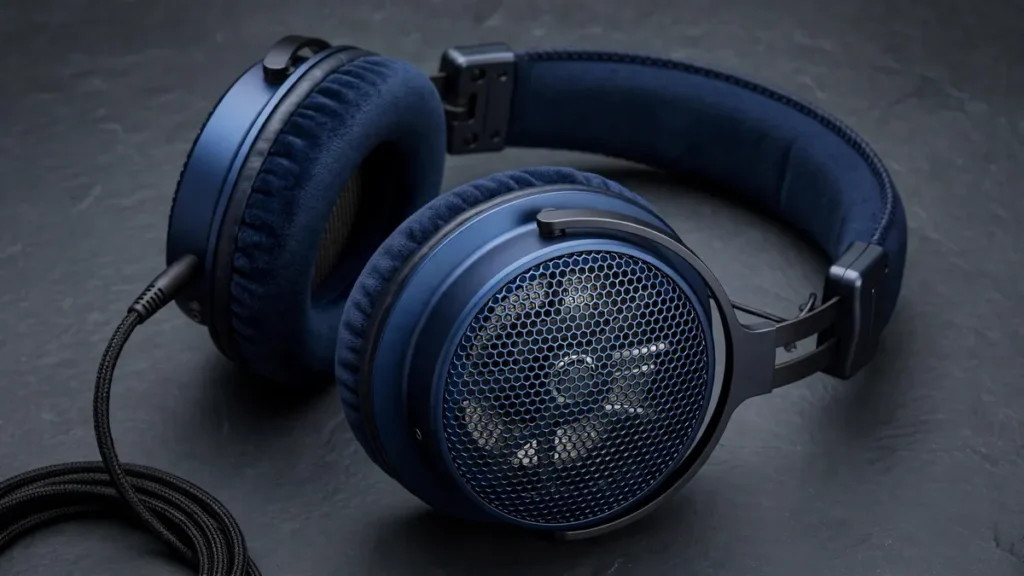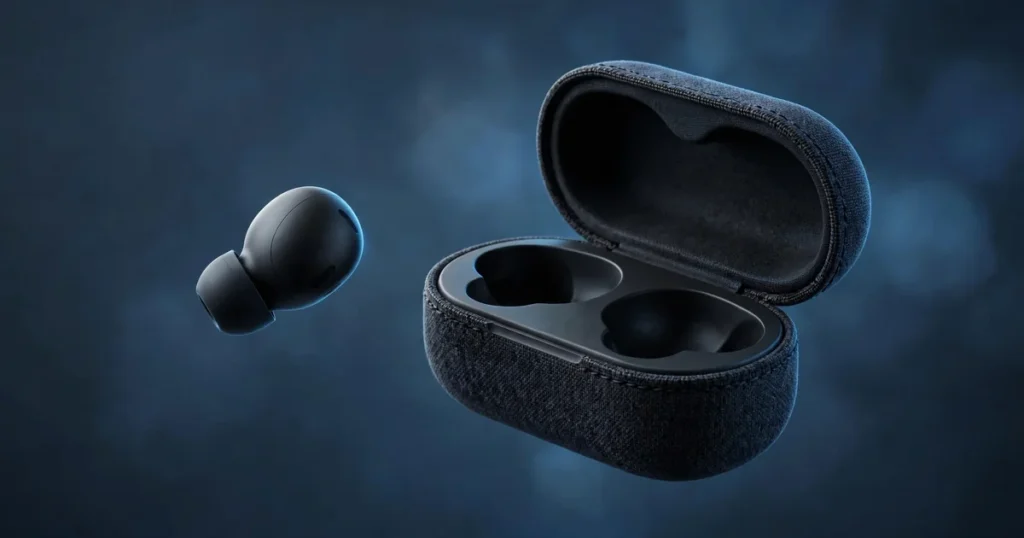
The Sennheiser MOMENTUM True Wireless 3 is the third generation of Sennheiser’s flagship earbuds, and it’s the one where the series finally found its stride. The first two generations sounded superb but were bulky, had short battery life, and asked flagship money without quite delivering a flagship package. The MTW3 fixed nearly all of that: a much more compact design, adaptive noise cancelling, wireless charging, and the same 7mm TrueResponse drivers that made Sennheiser’s name in this category.
SoundMavericks verdict: the MTW3 remains one of the best-sounding true wireless earbuds you can buy, with ANC, comfort, and app features that still hold up against current flagships. Since the Momentum True Wireless 4 took over the top slot, the MTW3 has settled into an attractive position: near-flagship sound for comfortably less than flagship money. This guide covers the verified specs, how each feature performs, and whether the MTW3 or the MTW4 is the smarter buy for you.
| Sound Quality | 9.2 |
| Noise Cancelling | 8.5 |
| Comfort & Fit | 8.7 |
| Battery Life | 7.8 |
| Call Quality | 7.8 |
| Value | 8.8 |
- Superb, detailed sound from 7mm TrueResponse drivers with aptX Adaptive
- Effective hybrid adaptive ANC with strong wind-noise reduction
- Much smaller and more comfortable than the MTW2, with 4 tip sizes and 3 fin sizes
- Qi wireless charging plus USB-C, 10-minute quick charge
- Deep Sound Control app: EQ, sound personalization, Sound Zones
- Often available well below its successor’s price
- Multipoint pairing only arrived later via firmware update
- Call quality is decent but trails the best in class
- No lossless Bluetooth codec — aptX Adaptive tops out the codec list
- IPX4 only; the MTW4 adds dust resistance
Sennheiser Momentum True Wireless 3 Specs
Every specification below comes from Sennheiser’s official spec sheet and the current Amazon listing, both verified during research. Nothing here is estimated.
| Driver | 7mm TrueResponse dynamic transducer, closed-back |
| Frequency response | 5 Hz – 21,000 Hz |
| Sensitivity | 107 dB SPL (1 kHz / 1 mW) |
| Total harmonic distortion | < 0.08% (1 kHz / 94 dB SPL) |
| Bluetooth | Bluetooth 5.2, Class 1; profiles A2DP, AVRCP, HFP |
| Codecs | SBC, AAC, aptX, aptX Adaptive |
| Noise cancelling | Hybrid Adaptive ANC with transparency (awareness) mode |
| Microphones | 3 MEMS mics per earbud, beamforming for call noise reduction |
| Battery life | Up to 7 hours per charge (ANC off); up to 28 hours total with charging case |
| Charging | USB-C and Qi wireless charging; 10 min charge ≈ 1 hr playback; full charge ≈ 1.5 hrs |
| Water resistance | IPX4, splash resistant (earbuds only) |
| Weight | 5.8 g per earbud; 66.4 g charging case |
| Fit accessories | 4 ear tip sizes, 3 ear fin sizes |
| Colors | Black, White, Graphite |
| App | Sennheiser Smart Control (iOS/Android): EQ, Sound Check personalization, Sound Zones, customizable touch controls, firmware updates |

Sound Quality
Sound is the reason to buy the MTW3, and SoundMavericks puts it among the best wireless earbuds we’ve assessed for pure listening. The 7mm TrueResponse drivers deliver the classic Sennheiser signature: detailed and balanced through the mids, clean extended treble, and bass that’s present and well-controlled rather than bloated. The professional consensus mirrors this — reviewers consistently praise the MTW3’s naturalistic timing, detail retrieval, and tonal unity, and the design earned a 2022 Red Dot Design Award.
Two things extend the sound quality further than the spec sheet suggests. First, codec support matters: on Android phones, aptX Adaptive scales the bitrate to your signal quality, which is a genuine step up from plain AAC. iPhone users are limited to AAC, which still sounds very good through these drivers but doesn’t squeeze out everything they’re capable of. Second, the Smart Control app’s Sound Check personalization walks you through a quick listening test and builds a tuning profile around your hearing — it’s one of the better implementations of the concept, and the standard 5-band EQ is there if you’d rather tune manually.
If sound quality is your overriding priority, the MTW3 sits comfortably in our roundup of the best audiophile earbuds, and purists who don’t need wireless at all should compare with wired options in our best IEMs guide. For everyone else, the MTW3’s tuning is a safe recommendation: detailed enough for critical listening, musical enough for everything else.
Noise Cancelling and Transparency
The MTW3 uses hybrid adaptive ANC — feedforward and feedback microphones working together, with the cancellation level adapting to your environment. In practice it’s a strong performer: it handles low-frequency drone (planes, trains, office HVAC) convincingly and, notably, wind noise better than many rivals at the time of launch. It doesn’t quite match the very top tier of Sony and Bose for sheer silence, but it’s competitive and a large step up from the MTW2.
Transparency mode is genuinely useful rather than a checkbox feature, and the Sound Zones feature in the app lets you automate ANC and transparency behavior by location — ANC at the coffee shop, transparency at the office, for example. Between the ANC, the awareness mode, and the strong passive isolation from a good tip seal, the MTW3 covers commuting, office, and travel well.
Design, Fit, and Comfort
The MTW3 is dramatically smaller than the chunky MTW2, and the redesign is the single biggest quality-of-life improvement. The earbuds sit flush in the ear with a flatter touch surface, and the fabric-finish charging case keeps the premium Momentum look while pocketing easily. In the box you get four ear tip sizes and three ear fin sizes, which is more fit flexibility than most flagships include — worth spending ten minutes on, since tip seal determines both comfort and bass response.
Comfort is a strong point for most ears, including smaller ones; if fit is a particular concern, our guide to the best earbuds for small ears covers what to look for. IPX4 splash resistance on the earbuds means sweat and light rain are no problem, though this isn’t a sports bud and there’s no dust rating. The over-ear Momentum 4 Wireless remains the pick if you want the Momentum sound in a full-size headphone.
Battery, Charging, and Connectivity
Battery life is rated at up to 7 hours per charge with ANC off and up to 28 hours total with the charging case. Real-world use with ANC on lands a little under the headline figure — that’s normal for this category — and the 10-minute quick charge buying roughly an hour of playback is genuinely handy. Charging via USB-C or Qi wireless pads covers every desk setup.
Connectivity is Bluetooth 5.2 Class 1, which gives the MTW3 strong range and a stable connection. One important note: multipoint pairing — staying connected to a phone and laptop simultaneously — wasn’t available at launch but was added later via a firmware update, and the current Amazon listing advertises it. Make sure you update the firmware in the Smart Control app on day one. If native out-of-the-box multipoint is a must-have, that’s a point in favor of the newer MTW4.
MTW3 vs MTW4: Which Should You Buy?
The Momentum True Wireless 4 is the newer flagship, and it improves on the MTW3 in measurable ways: Bluetooth 5.4 with aptX Lossless and Snapdragon Sound, an IP54 rating that adds dust resistance, slightly longer battery life (7.5 hours per charge, 30 hours total), multipoint pairing out of the box, and improved ANC and call processing. Same excellent fit, same app, refined internals.

So why buy the 3? Sound quality. The MTW3’s tuning is beloved and, for most listeners, audibly on par with the MTW4 — the newer model’s lossless codec only matters if your phone supports Snapdragon Sound and your streaming service serves lossless files. With the MTW4 holding the flagship slot, the MTW3 typically sells for noticeably less, making it the value pick for sound-first buyers who don’t need the newest Bluetooth stack. Our take: buy the MTW4 if you want multipoint out of the box, dust resistance, and future-proof codecs; buy the MTW3 if you want flagship-tier sound for less. If you’re cross-shopping Sennheiser’s over-ear flagships too, see our Momentum 4 vs Sony WH-1000XM5 comparison.
Who the MTW3 Is For
Buy it if: sound quality is your top priority; you use an Android phone and can take advantage of aptX Adaptive; you want strong ANC and comfort for commuting or office use; or you want Sennheiser’s flagship tuning without paying flagship prices. The Graphite finish is also worth a look if you prefer it over black — check availability here.

Skip it if: you need the absolute best call quality (Sony’s WF line, covered in our Sony WF-1000XM6 vs XM5 comparison, is stronger there); you want native multipoint and lossless Bluetooth out of the box; or you’re an iPhone-only listener who won’t get the aptX Adaptive benefit. In those cases, the MTW4 is the more future-proof buy.
Frequently Asked Questions
Is the Sennheiser Momentum True Wireless 3 still worth buying in 2026?
Yes, for the right buyer. The sound quality, comfort, and feature set have aged well, and with the MTW4 as the current flagship, the MTW3 typically sells for noticeably less — making it one of the best value picks among premium earbuds. Just make sure to update the firmware to get multipoint support.
Does the MTW3 support multipoint Bluetooth pairing?
Yes, but with a caveat: multipoint wasn’t available at launch and was added via a firmware update. Update the earbuds in the Sennheiser Smart Control app first, then enable multipoint in the app settings to stay connected to two devices at once.
What is the battery life of the Momentum True Wireless 3?
Up to 7 hours per charge with ANC off, and up to 28 hours total including the charging case. Using ANC reduces per-charge time somewhat. A 10-minute quick charge delivers roughly an hour of playback, and the case charges over USB-C or Qi wireless pads.
What is the difference between the Momentum True Wireless 3 and True Wireless 4?
The MTW4 adds Bluetooth 5.4, aptX Lossless and Snapdragon Sound support, an IP54 dust-and-water rating (vs IPX4), slightly longer battery life, out-of-the-box multipoint, and improved ANC and call processing. The MTW3 matches it on core sound quality for most listeners and typically costs less.
Does the Momentum True Wireless 3 support wireless charging?
Yes. The charging case supports Qi wireless charging in addition to USB-C wired charging, and a full charge takes about 1.5 hours either way.
Is the Momentum True Wireless 3 waterproof?
Not fully — the earbuds are IPX4 rated, meaning they resist splashes and sweat, which is fine for workouts and light rain. The charging case has no water resistance rating, and the earbuds have no dust rating.

I am the founder of Sound Mavericks, where I provide the polite truth about audio equipment. I started this site because consumer electronics reviews are often too technical. Instead of using a silent lab, I test headphones, earbuds, and Bluetooth speakers in the real world – like on a noisy subway or in a busy coffee shop.
To stay independent, I buy my own review units (mostly from the United States) rather than accepting free gifts from brands. Once I finish testing a product, I sell it locally to our community. My goal is to help you understand sound quality, active noise cancellation (ANC), and battery life without the marketing hype.