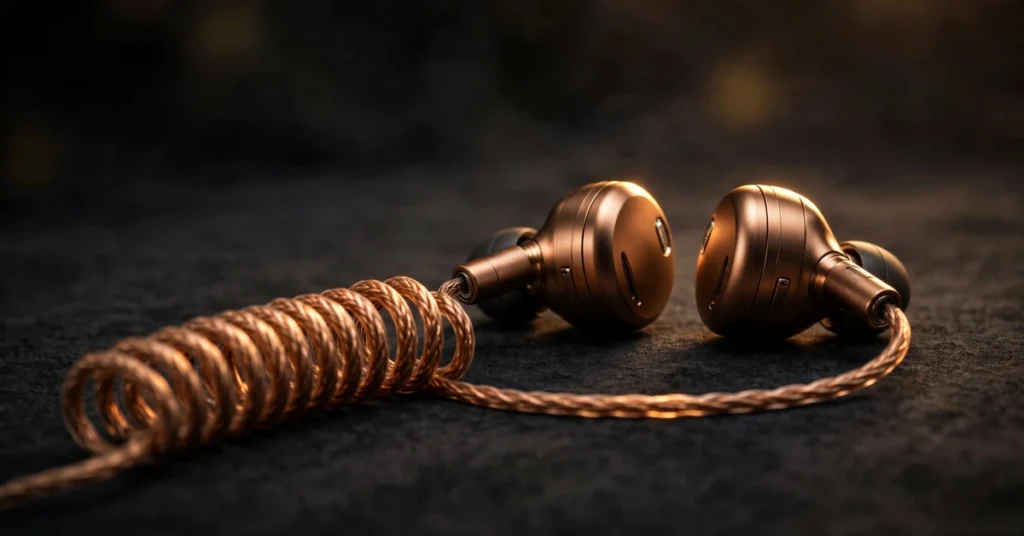
Our verdict: The Shure SE535 remains one of the smartest buys in wired in-ear monitors — a triple-driver classic whose midrange detail and stage-ready isolation have kept it relevant for well over a decade. It is not the flashiest or the bassiest IEM you can buy, but for vocal clarity, long-session comfort, and bulletproof build, it is still a benchmark.
| Sound Quality | 9.0 |
| Comfort & Isolation | 9.0 |
| Build & Design | 8.5 |
| Accessories | 8.0 |
| Value | 7.5 |
How we score: SoundMavericks scores are editorial ratings based on manufacturer specifications, the live Amazon listing data, and analysis of long-term owner and professional-review consensus. We do not imply hands-on testing of every unit we cover.

Shure SE535 Specs at a Glance
| Driver configuration | Triple high-definition MicroDrivers (balanced armature) per side |
| Sensitivity | 119 dB SPL/mW (at 1 kHz) |
| Impedance | 36 ohms (at 1 kHz) |
| Frequency range | 18 Hz – 19 kHz (LTD version: 18 Hz – 19.5 kHz) |
| Sound isolation | Up to 37 dB (passive) |
| Cable | Detachable, gold-plated MMCX connectors; 64 in (162 cm) 3.5 mm standard cable |
| Fit | Over-the-ear wireform design |
| Colors | Bronze (SE535-V), Clear (SE535-CL), Limited Edition Red (SE535LTD) |
| Warranty | 2-year limited warranty |
Sound Quality: The Famous Shure Midrange
The SE535 runs three balanced-armature drivers per earpiece — dual woofers handling the low end and a dedicated tweeter for the highs — joined by a passive crossover. On paper that is the classic SE535 formula, and in practice it produces the sound signature Shure is known for: a rich, forward midrange that puts vocals, guitars, and acoustic instruments front and center.
Bass is the most debated part of the SE535’s tuning. It is punchy, tight, and well-controlled rather than boosted — satisfying for rock, jazz, and acoustic material, but bassheads coming from modern consumer tunings will find it restrained. If you want skull-rattling sub-bass, this is not your IEM.
Mids are where the SE535 earns its reputation. Vocals sound intimate and textured, with a smoothness that makes long listening sessions effortless. This is the quality that made the SE535 a stage-monitor staple: singers and instrumentalists hear themselves clearly without harshness.
Treble is detailed but polite — crisp enough to reveal texture in strings and cymbals, with a gentle roll-off at the very top that keeps the sound non-fatiguing. Some listeners wish for more air and sparkle, but the tuning is deliberate: nothing here will shout at you over a four-hour session.
Soundstage is wide for an IEM of its era, with clean instrument separation that suits complex arrangements. At 119 dB sensitivity and 36 ohms, the SE535 is easy to drive — your phone or laptop gets plenty of volume, no amplifier required.
One caveat worth stating plainly: the SE535 is revealing. Feed it well-recorded material and it sings; feed it low-bitrate streams or harsh masters and it will show you every flaw. This is not a flaw in the IEM — it is what a reference-leaning monitor does. If your library is mostly high-quality streaming or lossless files, you will get the full benefit. Genre-wise, the SE535 shines on vocals, acoustic, jazz, rock, and classical, and it is perfectly competent with electronic and hip-hop as long as you do not expect exaggerated low-end slam.
Design, Comfort, and Isolation
The SE535’s housings are compact, lightweight plastic with an ergonomic shape that sits nearly flush in the ear. The over-the-ear cable routing with Shure’s wireform memory section keeps the cable out of the way and dramatically reduces cable microphonics — the thumping you hear with straight-down earbuds when the cable moves.
Isolation is a genuine strength: Shure rates the sound-isolating design at up to 37 dB of outside-noise attenuation with a proper seal, which rivals many active noise-cancelling earbuds for blocking engine drone and office chatter — no battery required. Getting that seal matters, which is why the fit kit is so generous: black foam sleeves, grey soft-flex silicone sleeves, and triple-flange sleeves in multiple sizes are all included, plus yellow foam tips.
There is a small learning curve. The over-ear routing feels unusual for the first few wears, and finding your ideal sleeve takes some experimentation — plan on trying at least two or three tip styles before judging comfort. Once the fit clicks, the SE535 all but disappears, and multi-hour sessions are genuinely comfortable. That fit-first design is exactly why these became the default recommendation for drummers, vocalists, and frequent flyers.
Build quality is stage-grade. The housings feel dense and well-assembled, and the real longevity story is the detachable cable: MMCX connectors with a lock-snap mechanism let you replace a worn cable in seconds instead of replacing the whole IEM. That single feature is a big reason decade-old SE535s are still in daily use.
Cable, Connectivity, and What’s in the Box
The standard SE535 ships with a 64-inch detachable cable terminated in a 3.5 mm plug — long enough for stage and desk use, though a bit generous for pocket carry. The gold-plated MMCX connectors allow 360-degree rotation of the earpieces for dialing in the fit.
Shure sells the SE535 in several configurations worth knowing about:
- Standard wired (Clear SE535-CL or Bronze SE535-V) — the classic 3.5 mm version reviewed here.
- +UNI — adds a universal 3.5 mm remote + mic cable for calls and playback control on phones.
- +BT2 — a Bluetooth 5.0 cable that converts the SE535 into wireless earbuds while keeping the same drivers.
- RMCE-BT1 — a separate Bluetooth-enabled cable that existing SE535 owners can buy to go wireless.
In the box you get the earphones, the detachable cable, the full sleeve fit kit, a premium zippered carrying case, a 3.5 mm-to-6.3 mm (quarter-inch) adapter for studio gear, and an airline adapter. It is one of the more complete accessory bundles in the category.
SE535 Variants: Which One Should You Buy?
The SE535 family has three main wired variants, and the differences are real:
- SE535-CL (Clear): the original version with the standard tuning and a transparent shell. The safe default.
- SE535-V (Bronze): the current flagship listing with the same core sound in a metallic bronze finish. This is the version we link to here — it is the main current listing on Amazon’s Shure store.
- SE535LTD (Limited Edition Red): a distinctly tuned variant with a different frequency filter — slightly extended highs (18 Hz – 19.5 kHz) and a red shell paired with a shorter light-gray cable. Some listeners prefer its livelier top end; purists stick with the standard tuning.
Our take: buy the standard Clear or Bronze unless you specifically want the LTD’s tuning. Sound differences between Clear and Bronze are negligible — pick the finish you like looking at.
SE535 vs SE425: Is the Upgrade Worth It?
The SE425 is the SE535’s dual-driver sibling, and the comparison is straightforward. The SE425 shares Shure’s mid-centric house sound but with noticeably less extension at both ends — thinner bass and less treble detail. The SE535’s third driver buys you fuller low end, airier highs, and a wider, more separated soundstage.
If you mostly listen to podcasts, audiobooks, and vocal-forward music, the SE425 gets you most of the way there. If you want the full-range musical experience — and the flagship build and accessory set — the SE535 is the meaningful step up. For most buyers choosing between the two, the SE535 is the one that ends the upgrade itch.
Who Should Buy the SE535 — and Who Should Skip It
Buy it if: you prioritize vocal clarity and midrange texture; you want stage-proven isolation for travel or noisy environments; you value a replaceable cable and long-term durability; or you are a musician needing an affordable in-ear monitor.
Skip it if: you crave heavy bass — modern bass-tuned IEMs will satisfy you more for less; you need wireless out of the box (consider the +BT2 version instead); or you want the absolute latest driver technology — the SE535’s design is mature, and that is both its charm and its limitation.
Frequently Asked Questions
Is the Shure SE535 still worth buying in 2026?
Yes, for the right buyer. Its triple-driver tuning, 37 dB passive isolation, and replaceable-cable design remain competitive, and its longevity is proven — these are IEMs people keep for a decade. It is not the newest or most technically advanced option, but as a midrange-focused all-rounder it still holds its own.
What is the difference between the SE535 and the SE535 LTD?
The Limited Edition Red (SE535LTD) uses a different frequency filter for a slightly livelier tuning with extended highs (up to 19.5 kHz), and it ships with a shorter 46-inch light-gray cable in a red shell. The standard Clear and Bronze versions share the classic SE535 tuning.
Do the Shure SE535 need an amplifier?
No. With 119 dB sensitivity and 36-ohm impedance, the SE535 reaches comfortable listening volumes from any phone, laptop, or portable player. A dedicated DAC/amp can refine the sound slightly, but it is entirely optional.
Can the cable be replaced?
Yes — and that is one of the SE535’s best features. The cable detaches via gold-plated MMCX connectors, so a damaged or upgraded cable (including Shure’s Bluetooth and remote/mic cables) swaps in without tools.
Are the SE535 good for phone calls?
The standard wired version has no microphone. If calls matter, choose the +UNI version with its remote + mic cable, or the +BT2 Bluetooth version — both keep the same earpieces and drivers.
The bottom line: the Shure SE535 is a modern classic for a reason — triple-driver clarity, superb isolation, and a build designed to last years, not seasons. It will not win a bass contest, but for listeners who live in the midrange, it remains one of the safest recommendations in wired audio.

I am the founder of Sound Mavericks, where I provide the polite truth about audio equipment. I started this site because consumer electronics reviews are often too technical. Instead of using a silent lab, I test headphones, earbuds, and Bluetooth speakers in the real world – like on a noisy subway or in a busy coffee shop.
To stay independent, I buy my own review units (mostly from the United States) rather than accepting free gifts from brands. Once I finish testing a product, I sell it locally to our community. My goal is to help you understand sound quality, active noise cancellation (ANC), and battery life without the marketing hype.