Every sleep app offers both, usually as two tiles with no explanation, so the white noise vs pink noise question is really a question about spectrum. Both are steady, random sound with no melody and no pattern to follow. They differ in how their energy is spread across the frequencies you can hear, and that single difference changes how each one sounds, what each one masks, and which one you will still tolerate at hour six of the night. Here is the split, and how to choose without buying anything.
The spectrum difference, simply put
White noise carries equal energy at every frequency, the audio equivalent of white light mixing every colour evenly. That flat spread sounds bright and hissy, like an untuned radio or a fan on its top setting, because human hearing is more sensitive to high frequencies and white noise feeds them at full strength. Pink noise tilts the balance. As Soundcore’s sleep guide explains, pink noise covers the same range but its volume tapers off as frequency climbs, following roughly a one over f pattern, so the top end sits back and the sound lands lower and softer.
The rainfall comparison you see everywhere is not just marketing. Steady rain naturally spreads its energy in a pinkish way, which is why pink noise reads to most ears as weather rather than machinery.
What each one sounds like at bedtime
White noise is present. It fills a room assertively, and some sleepers find the hiss itself becomes the thing they listen to. Pink noise recedes. At the same measured volume it feels quieter and rounder, closer to a waterfall heard from another room, and people who describe white noise as harsh usually settle on pink within a night or two. Neither is objectively nicer; they are different balances of the same steady wash.
Volume for volume, white noise’s stronger top end also means it reaches further into the frequency territory where speech and household clatter live. That is the masking story, and it cuts both ways.
Masking: snoring, traffic and the hallway
Masking works by shrinking contrast. A steady sound raises the floor of the room, so a door latch, a partner’s snore or a passing scooter stands out less against it and is less likely to pull you awake. Soundcore’s comparison calls white noise the best all rounder for masking sudden, unpredictable sounds, and that matches the physics: its energy in the speech and clatter bands covers sharp noises that pink noise, with its turned down top end, leaves partly exposed.
Pink noise still masks well, especially low and mid frequency disturbance such as traffic rumble and heating systems, and it does so at a character most people find easier to sleep inside. If your problem is a snoring partner in the same bed, start white. If your problem is a humming building and a restless mind, start pink. Our roundup of the best noise cancelling headphones for sleeping and snoring covers the hardware side of the same fight.
What the sleep research actually supports
Claims here outrun evidence quickly, so the careful version matters. Soundcore’s guide, reviewing the study landscape, notes that pink noise has the most sleep research behind it: in a systematic review it cites, nine of eleven pink noise studies reported positive sleep outcomes, while white noise results were mixed, with only six of eighteen studies reporting improvements. A Northwestern University study it mentions found that pink noise pulses timed to slow brain waves boosted deep sleep and memory scores in older adults.
Two cautions belong with those numbers. Timed pulses in a lab are not the same as a loop playing all night from an app, and mixed white noise results do not mean white noise fails; they mean study designs vary. The honest takeaway is that steady sound helps many people mainly by masking, pink has the friendlier evidence file, and the sound you barely notice at a low volume is the one most likely to help you. Loud playback all night is its own problem; keep levels modest.
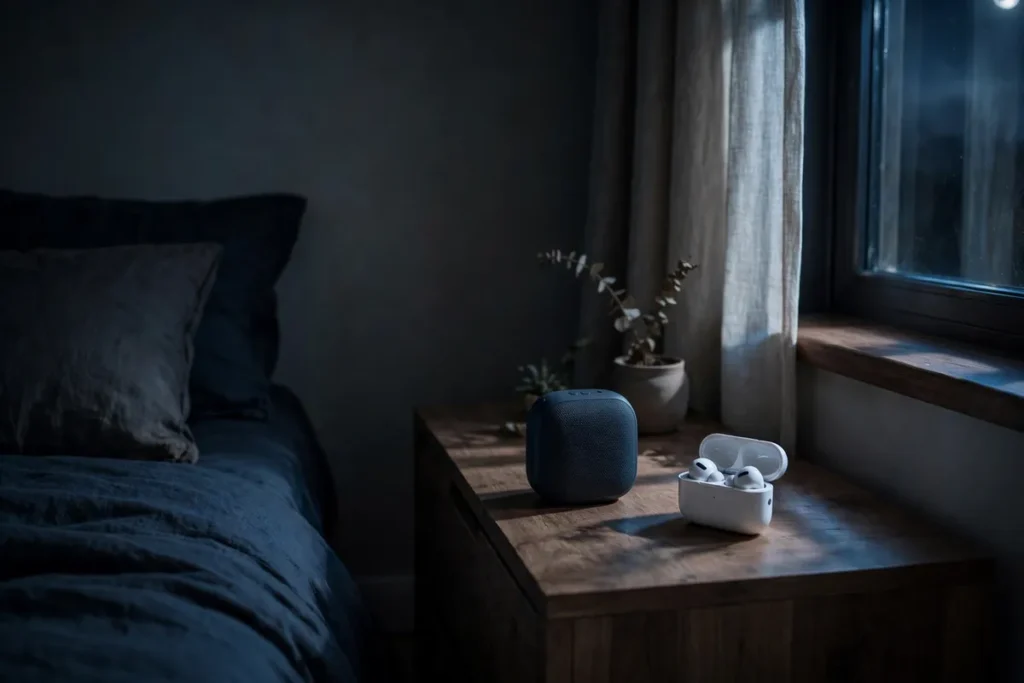
Playing noise through earbuds overnight
If you play sleep sounds through earbuds rather than a speaker, comfort and steady output matter more than features. These three sealed models pair masking playback with real noise cancelling for the noises a loop cannot cover.


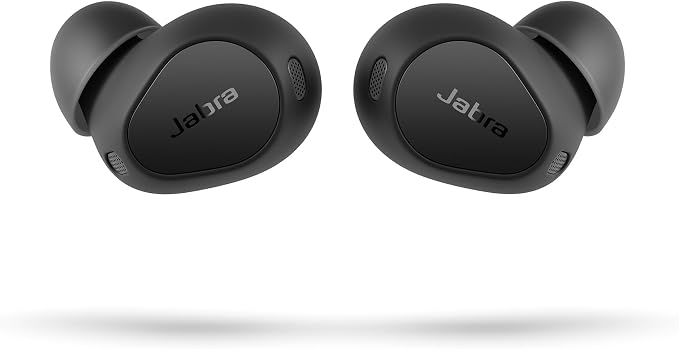
Keep the volume low whichever pair you choose. The loop’s job is to smooth the room, not to win against it, and ears that ring in the morning were played too loud.
One more practical note for earbud sleepers: set a sleep timer where the app offers one. Many people only need masking for the first hour and for the noisy stretch before dawn, and silence in between is better rest than any loop. If you wake when the timer stops, that is useful information too: your room, not your head, was the problem all along.
Brown noise, and matching the sound to the room
A third colour keeps appearing in sleep apps and deserves a sentence. Brown noise tilts further than pink, dropping energy twice as fast as frequency rises, so it sounds like deep rumble: heavy rain on a roof, a distant waterfall’s low end. People who find both white and pink too present often settle on brown, and it masks low frequency disturbance such as traffic and aircraft well, while leaving speech and household clatter comparatively exposed.
Room matching matters as much as colour. A bedroom over a busy street needs masking weight in the low and mid bands. A nursery next to a living room needs speech covered. A hotel room with an unpredictable corridor needs the broad, assertive cover of white. Pick the colour against the noise you actually have, at the lowest volume that does the job, and let a week of mornings rather than a first impression make the call.
Focus, and how to run your own test
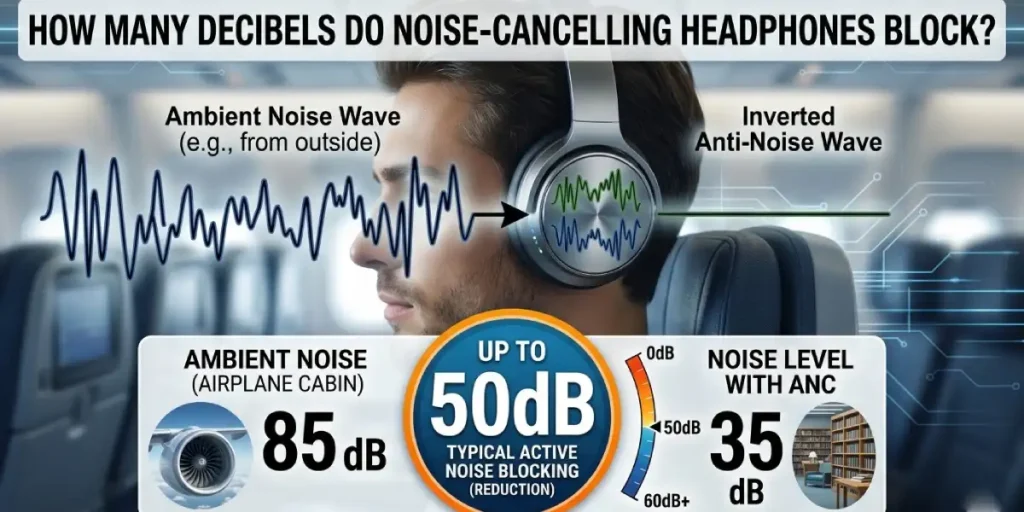
For daytime focus the same split applies in miniature. White noise’s stronger masking suits open offices and shared houses, where voices are the distraction and voices sit in the bands white covers best. Pink noise suits readers and writers who find hiss fatiguing over hours. Our look at budget sleep earbuds and the 1MORE SleepBuds Z30 review cover the wear all night options, and our explainer on how many decibels noise cancelling blocks explains why masking and cancelling are different tools.
Run the test properly: same volume, three nights each, no other changes. Judge by how often you woke and how the morning felt, not by which sounded nicer in the first minute. Most people land quickly, and the loser of your test costs you nothing, since both live in the same free apps.
Frequently asked questions
What is the difference between white noise and pink noise?
How their energy spreads across frequencies. White noise carries equal energy everywhere, which sounds bright and hissy. Pink noise reduces energy as frequency rises, so it sounds lower, softer and closer to steady rainfall.
Which is better for sleep, white noise or pink noise?
Pink noise has the stronger research record and most people find it easier to tolerate all night. White noise masks sudden sounds more aggressively. The better choice is the one you can keep low and barely notice.
Does pink noise really deepen sleep?
Some studies found pink noise, including pulses timed to brain waves in a lab setting, improved deep sleep measures. A plain all night loop from an app is not the same intervention, so treat deep sleep claims as promising rather than proven.
Can I play white or pink noise all night?
Many people do, at modest volume. Keep it as low as still masks your room, since the goal is a steady floor of sound, not loud playback. If your ears ring or feel full in the morning, it was too loud.
Which noise is better for focus?
White noise masks voices and office clatter more strongly, which suits shared spaces. Pink noise is gentler over long stretches and suits reading and writing, where a bright hiss can become its own distraction.

I am the founder of Sound Mavericks, where I provide the polite truth about audio equipment. I started this site because consumer electronics reviews are often too technical. Instead of using a silent lab, I test headphones, earbuds, and Bluetooth speakers in the real world – like on a noisy subway or in a busy coffee shop.
To stay independent, I buy my own review units (mostly from the United States) rather than accepting free gifts from brands. Once I finish testing a product, I sell it locally to our community. My goal is to help you understand sound quality, active noise cancellation (ANC), and battery life without the marketing hype.