
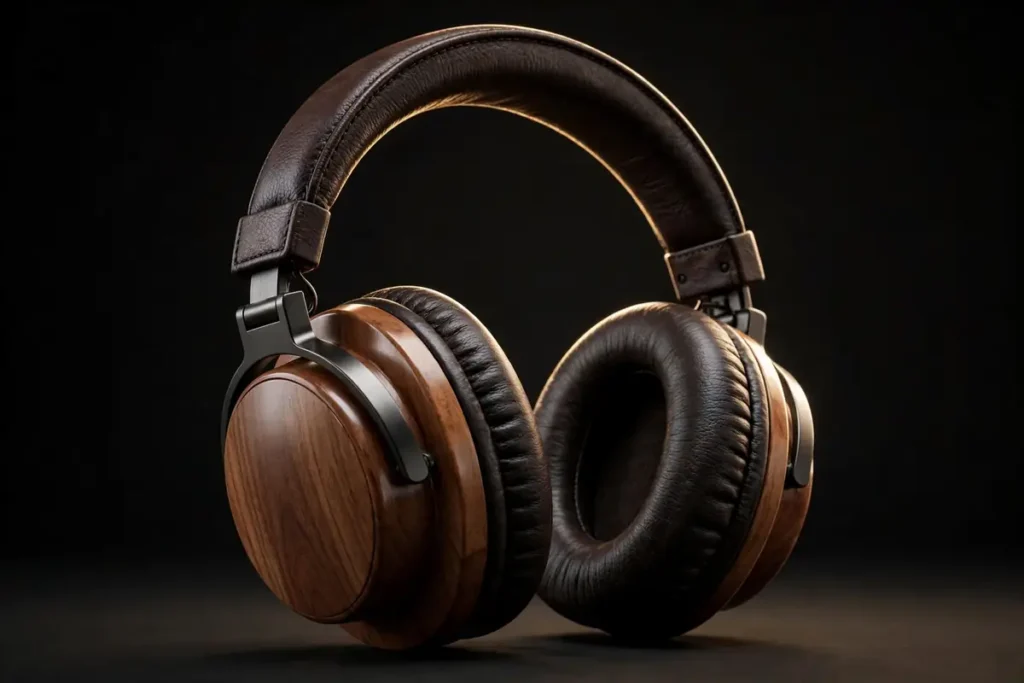
This sivga oriole review covers SIVGA’s wooden closed-back, the SV022 Oriole: hand-finished rosewood cups, a 50 mm dynamic driver built in-house, and a detachable cable, in a wired headphone that asks for nothing but a 3.5 mm socket. It sits above the better-known Robin in the range and aims at listeners who want a handsome, easygoing closed-back for home listening. Our provisional overall is 5.9, and the low headline needs its context: Comfort at 8.8 and Sound at 8.0 describe the headphone itself, while the wired conventions of our scoring, a 5.0 Battery placeholder and a 3.0 Calls score for a headphone with no microphone, pull the average down.
A note on method. This review is research-based, not hands-on. The scores are provisional, drawn from published specifications and the consensus of specialist reviewers, and the two convention scores are flagged openly above rather than hidden. The Amazon listing for the brown finish was verified at build time, and the product card below uses that listing’s own photo.

SIVGA Oriole 5.9/10
Why you: you want a closed-back for home listening that looks as good as it sounds and runs happily from a phone or dongle. Comfort scores 8.8, the rosewood build is a class above the price, and the tuning is warm and relaxed.
Trade-off: the soundstage is narrow for a headphone of this size, and there is no microphone, no Bluetooth and no folding flat for travel beyond the swivelling cups. It is a stay-at-home headphone.
Wired 3.5 mm · 50 mm dynamic driver · Rosewood cups · Detachable cable · 280 g · No mic or battery
Sound quality
Sound scores 8.0. The Oriole is tuned warm and relaxed: bass is full and tidy rather than boosted, the midrange sits forward enough to give vocals presence, and the treble sparkles without the rough edge that some reviewers found in the cheaper Robin. SIVGA describes the tuning as balanced with a wide feel and aimed at classical and jazz, and the specialist consensus broadly agrees, with rock and pop handled well too. Nothing about the presentation is aggressive, which suits long sessions.
The limit is space. Imaging is centred and the stage stays inside the head rather than spreading wide, so large-scale orchestral recordings and games that reward width feel compact. Detail retrieval is good for the class, helped by the stiff, light diaphragm SIVGA makes in-house, but this is a tone-first headphone. Listeners who want width above warmth should look at open-back alternatives such as the one in our HiFiMan Sundara review, accepting the sound leakage that comes with that design.
Isolation and everyday use
There is no active noise cancelling, and ANC scores 2.5 to reflect a closed-back’s passive contribution only. The sealed cups and snug pads block a useful slice of household and office noise, measured by reviewers at roughly 10 to 15 dB, and leakage outward is low, so the Oriole behaves in shared rooms and late-night listening. It will not quiet an aircraft cabin or a busy street, and it was not built to.
Calls score 3.0 because there is no microphone at all. This is a listening-only product: no Bluetooth, no controls, no app. What it offers instead is simplicity that wireless headphones cannot match. Plug in and listen, with no battery state to manage and no pairing to repeat. Buyers who like the wired idea but need a source upgrade path will find the portable options in our best DACs guide, though at 32 ohms and 108 dB sensitivity the Oriole reaches full volume from almost anything.
Design, build and comfort
Comfort scores 8.8, the highest bar in this review and the one every specialist review agrees on. The headphone weighs 280 grams, the memory-foam pads are soft and deep, and the headband spreads the load so well that reviewers describe forgetting the weight entirely. The cups swivel flat and rotate to sit correctly on different head shapes, an improvement over the Robin that glasses wearers in particular will feel. The caution is ear size: the oval pads suit small to medium ears best, and larger ears may touch the pad edges.
The build is the other headline. Each rosewood cup is CNC-machined, then sanded, polished and finished by hand with a high-gloss finish, joined by metal yokes that feel a class above the price. Brown and black finishes are offered. The cable detaches at both cups through 2.5 mm connectors and runs 1.8 metres to a 3.5 mm plug, with a 6.35 mm adapter and a hemp carry pouch in the box. The stock cable is ordinary and a little long for desk use, but the detachable design makes replacing it simple.
Value and who it suits
Value scores 8.2. The Oriole competes against plastic closed-backs from far bigger brands and answers them with materials, finish and comfort they do not offer at this level, plus a tuning that asks nothing of the listener. Against its own sibling the case is narrower: the Robin costs less and plays livelier, and some reviewers prefer it outright, so the Oriole’s premium buys refinement and fit rather than a different class of sound.
As a wired-only headphone it also gives up the entire wireless feature set, which is why our best wireless headphones guide exists for buyers who need it. The Oriole’s buyer is settled at home, listens for pleasure, and values an object that feels crafted. Battery scores the 5.0 neutral placeholder used for wired models, since there is no battery to judge.
SIVGA Oriole specs
| Spec | SIVGA Oriole |
|---|---|
| Design | Over-ear, closed-back, wired |
| Driver | 50 mm dynamic, developed in-house |
| Cups | High-density rosewood, CNC-machined and hand-polished; brown or black finish |
| Frequency response | 20 Hz to 20 kHz |
| Impedance | 32 ohms |
| Sensitivity | 108 dB |
| Cable | Detachable, 1.8 m, 2.5 mm connectors at the cups, 3.5 mm plug; 6.35 mm adapter included |
| Weight | 280 g |
| Microphone | None |
Verdict
Buy the Oriole for home listening in comfort. An 8.8 Comfort score, an 8.0 Sound score and a standard of finish that embarrasses bigger brands make it one of the most pleasant closed-backs to live with at its level, and it needs no amplifier, no charging and no app to give its best.
Skip it if you need width and imaging for gaming or orchestral scale, a microphone, or any wireless feature at all. The 5.9 overall is a provisional, research-based number shaped by our wired scoring conventions; the headphone behind it is better than the average suggests, for the listener it was made for.
Frequently asked questions
Is the SIVGA Oriole open-back or closed-back?
Closed-back. The rosewood cups are sealed apart from three small vent ports on top of each cup, so the Oriole isolates passively and leaks very little sound to the room. Reviewers measure the passive isolation in the region of 10 to 15 dB, useful in a shared space, though it is not active noise cancelling and scores accordingly.
Does the Oriole need a headphone amplifier?
No. At 32 ohms with 108 dB sensitivity it is easy to drive, and phones, laptops and small USB dongle DACs all run it to full volume with headroom. A better source can tidy up the bass and detail, but nothing about this headphone requires extra hardware to enjoy.
How does the Oriole differ from the SIVGA Robin SV021?
The Oriole (SV022) is the step up from the Robin (SV021). It refines the treble, brings the midrange forward, adds a vertical swivel to the cups so they sit better on the head, and keeps the same wooden closed-back formula and 50 mm driver size. Listeners who found the Robin lively but rough at the top end are the Oriole’s target.
Is the Oriole cable replaceable?
Yes. The cable detaches at both cups via 2.5 mm connectors and ends in a 3.5 mm plug, with a 6.35 mm adapter in the box. The 2.5 mm cup connectors are less common than 3.5 mm, so aftermarket cables are a narrower market, but replacements and balanced cables do exist.
Does the Oriole have a microphone or Bluetooth?
No. The Oriole is a wired-only listening headphone with no microphone, no Bluetooth and no battery, which is why Calls scores 3.0 and Battery takes the 5.0 wired placeholder in our scoring. It is built for music at a desk or in an armchair, not for calls or commuting features.

I am the founder of Sound Mavericks, where I provide the polite truth about audio equipment. I started this site because consumer electronics reviews are often too technical. Instead of using a silent lab, I test headphones, earbuds, and Bluetooth speakers in the real world – like on a noisy subway or in a busy coffee shop.
To stay independent, I buy my own review units (mostly from the United States) rather than accepting free gifts from brands. Once I finish testing a product, I sell it locally to our community. My goal is to help you understand sound quality, active noise cancellation (ANC), and battery life without the marketing hype.
