
The Verdict
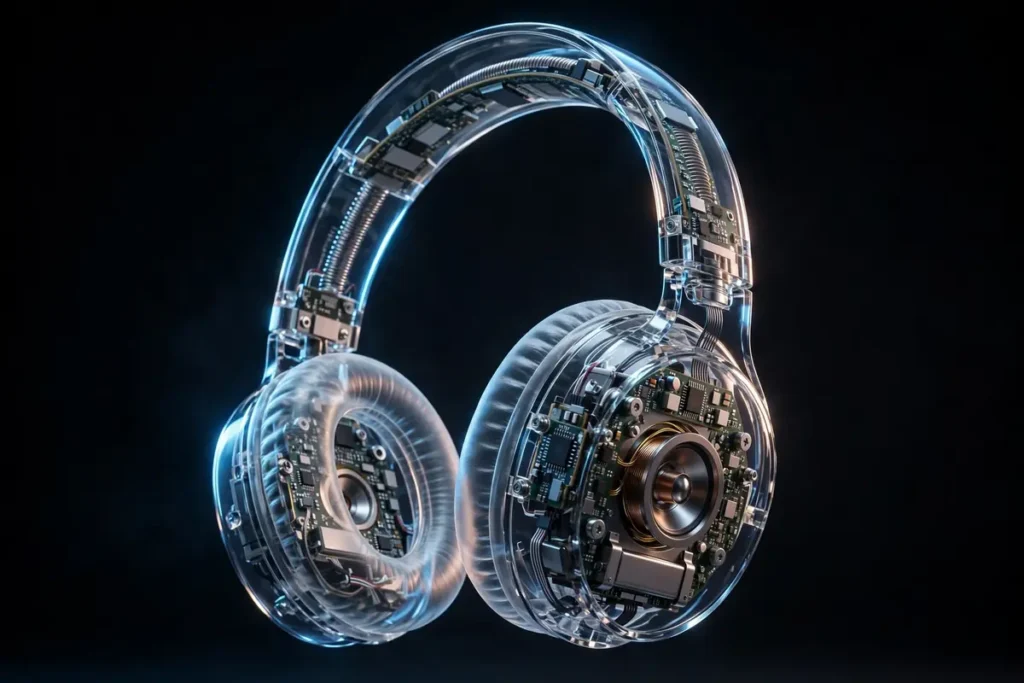
Nothing’s new flagship is the most ambitious over-ear the brand has ever shipped — and the most interesting mainstream ANC headphone of 2026. The Nothing Headphone (1) Pro swaps the original Headphone (1)’s single-driver, KEF-tuned design for a genuine triple-driver architecture (40mm dynamic bass, dedicated precision midrange, and a solid-state xMEMS treble driver) co-developed with London’s Metropolis Studios, plus a physical Flat EQ switch aimed at creators and semi-pro monitoring work. Adaptive ANC is rated at up to 46 dB from a 10-microphone array — a real step up for Nothing, though published early reviews still rank it a notch behind the Sony WH-1000XM6, Bose QuietComfort Ultra Headphones Gen 2, and AirPods Max 2 on pure noise cancellation. With 30 hours of battery with ANC on, Bluetooth 6.1 with LDAC and Auracast, and the signature transparent glass-and-aluminium design, the Headphone (1) Pro is built for Android users, EQ tinkerers, and design-first buyers who want flagship features without the AirPods Max silhouette. Our research-based score: 8.3/10, based on published early reviews and manufacturer-published specifications — we have not yet tested a unit ourselves.
| Sound Quality | 8.7 |
| Noise Cancelling | 8.3 |
| Comfort & Design | 8.6 |
| Battery Life | 8.0 |
| Call Quality | 7.8 |
| Features & Value | 8.2 |
Specifications
| Driver system | Triple driver: 40mm dynamic bass + 13x8mm precision midrange + 3.2×6.0mm xMEMS solid-state treble |
| Frequency response | 20Hz–40kHz |
| Tuning | Metropolis Studios (not KEF — the KEF partnership applied to the original Headphone (1)) |
| Noise cancelling | Adaptive ANC up to 46 dB, 10-mic array (3 feedforward + 2 feedback per side), 8mm silicone baffle |
| Transparency mode | Yes |
| Call microphones | 4-mic array with DNN wind/background processing |
| Bluetooth | Bluetooth 6.1, multipoint, Google Fast Pair, Microsoft Swift Pair |
| Codecs | SBC, AAC, LDAC; LC3 for Auracast broadcast (no aptX / aptX Lossless) |
| Auracast | Transmit and receive via the Nothing X app |
| Wired audio | USB-C up to 24-bit/192kHz lossless; 3.5mm up to 24-bit/96kHz; Hi-Res certified wired + wireless |
| Battery | 1,060mAh — up to 68h ANC off / 30h ANC on (AAC); up to 53h / 28h (LDAC); 5-min charge = 2h playback with ANC on; full charge ~2h |
| Weight | 327g |
| Build | Machined aluminium, titanium-alloy arms, 9H Panda Glass earcup windows; IP52 dust/water resistance |
| Controls | Tactile: volume roller, paddle, customizable button, Flat EQ switch, pairing button; in-ear detection; low-latency mode |
| App | Nothing X (Android 8+, iOS 13+): Advanced EQ, Personal Sound, spatial audio, Auracast control |
| Colors | Black, White |
| In the box | Hard-shell case, 3.5mm cable, USB-C cable, quick start guide |
Pros and Cons
- Triple-driver system with xMEMS treble — a first for mainstream over-ears, per Nothing
- Physical Flat EQ switch: instant studio-style neutral profile, no app needed
- ANC clearly improved over earlier Nothing headphones; strong on low-frequency rumble
- Deep customization: per-driver Advanced EQ, 5 genre presets, head-tracked spatial audio
- Auracast transmit and receive, LDAC, USB-C lossless, 3.5mm — genuinely flexible connectivity
- Premium materials (aluminium, titanium, Panda Glass) with 50%-softer ear cushions
- ANC still a step behind the Sony XM6 / Bose Ultra 2 class in independent tests
- Battery life regressed vs the original Headphone (1) and Headphone A
- 327g and no inward folding — not the best travel pick
- Volume roller can be knocked accidentally when worn around the neck (per Trusted Reviews)
- Case only protects the earcups; headband is exposed
- No aptX / aptX Lossless for Qualcomm-device users
Sound Quality
The story here is the driver architecture. Each earcup carries three transducers: a 40mm dynamic driver for bass (PET dome with a metal-ceramic coating and dual-magnet motor — Nothing claims 15% greater bass impact and 26% higher sensitivity than the original Headphone (1), per the company’s own lab figures), a 13x8mm precision dynamic driver with a PEN diaphragm for mids, and a 3.2×6.0mm xMEMS solid-state tweeter with a silicon diaphragm handling 10–40kHz. xMEMS drivers have previously appeared in in-ears and IEMs, but Nothing says the Headphone (1) Pro is the first over-ear to use one for treble — the stiff silicon diaphragm is designed for faster transient response at high frequencies.
Published early reviews land in a consistent place. Trusted Reviews calls the clarity and detail “outstanding,” with airy vocals, a wide soundstage, and precise imaging — though it notes the default tuning is brighter than the Headphone A, with less low-end boost, and that the bass is precise rather than boomy. The Verge found the default Balanced EQ forward in the mids and highs — present vocals with bite, extra-sizzly cymbals. The takeaway for bassheads: the hardware can reproduce deep sub-bass, but you will want to lean on the EQ to get there.
The customization ceiling is genuinely high. The Nothing X app offers an Advanced EQ with up to eight bands that can adjust the drivers independently, five Metropolis-tuned genre presets (Bass, Neo Jazz, Electronica, British Rock, Grime), a Personal Sound hearing profile, and five spatial modes — including Studio B, modeled on Metropolis’s flagship room — with head tracking. Our Bluetooth audio codecs explained guide covers what LDAC and LC3 actually do.
Noise Cancelling
Nothing rates the adaptive ANC at up to 46 dB — 4 dB up from the original Headphone (1) and roughly 5 dB better on average per Nothing’s own claims — driven by a 10-microphone array (three feedforward and two feedback mics per side) plus a new 8mm internal silicone baffle and dual-layer cushions that improve the passive seal. Nothing says the inward-facing mic orientation dramatically cuts wind interference, and Trusted Reviews reports wind noise is “almost entirely solved” versus the Headphone A, with background hums fully eliminated and nearby conversations noticeably reduced.
How does it stack against the class leaders? Honest answer: it sits just below them. CNET’s comparative testing found the AirPods Max 2 muffled a rumbling HVAC unit about 10% more effectively than the Pro, with the Sony XM6 and Bose QuietComfort (2nd Gen) also edging it out in the same test. The Verge ranks it behind the “current top three” — Sony XM6, Bose Ultra Headphones Gen 2, Apple AirPods Max 2 — while still calling it the best ANC Nothing has ever shipped. For commuters and office workers, that is a strong result; for frequent flyers chasing the absolute best, see how the category leaders compare in our Sony WH-1000XM4C vs XM5 vs XM6 comparison and our best ANC headphones for travel roundup. Transparency mode earns consistent praise from early reviewers for home use.
Comfort & Design
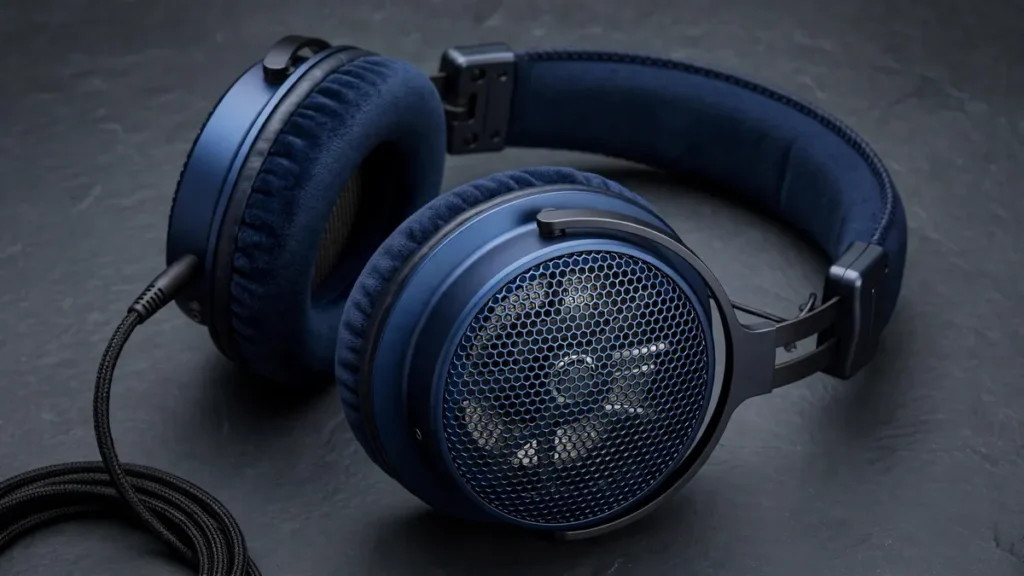
This is unmistakably a Nothing product: transparent 9H Panda Glass windows in the earcups reveal the matte-black internals, set against machined aluminium and titanium-alloy arms. Nothing says the titanium arms are 45% lighter than the original’s, the ear cushions are 50% softer with a wider headband and 12% thicker padding — changes specifically aimed at glasses wearers and long sessions. The IP52 dust-and-splash rating is a genuine differentiator at this level; most flagship over-ears have no rating at all.
There are real caveats. At 327g the Pro is not a lightweight, and it does not fold inward, so the travel case — a fun Peli-inspired hard shell — is bulkier than a folding rival’s. That case only wraps the earcups, leaving the headband exposed as a carry handle, and it has no storage compartments. Trusted Reviews also flagged that the volume roller can be brushed accidentally when the headphones hang around your neck, something it did not experience with the lighter Headphone A. Still, Trusted Reviews calls it “Nothing’s best-looking set of headphones yet,” and comfort over a full workday was reportedly excellent.
Battery Life
The 1,060mAh cell is rated for up to 68 hours with ANC off and 30 hours with ANC on over AAC — dropping to 53 and 28 hours respectively on LDAC. A 5-minute fast charge buys up to 4 hours of playback with ANC off (2 hours with ANC on), and a full charge takes about two hours. Those are solid absolute numbers — a week of commuting and office use on one charge, per Trusted Reviews’ daily testing — but the trajectory is backward: the original Headphone (1) managed 35/80 hours and the Headphone A stretches to 75 hours with ANC on. If endurance is your top priority rather than driver tech, that tradeoff matters.
Call Quality
Calls run on a separate 4-microphone system with DNN-based processing aimed at suppressing wind and background noise. The honest caveat: no independent lab (RTINGS, SoundGuys) has published call-quality measurements yet — the product launched September 29, 2026 — so we are scoring this on the hardware design and early reviewer impressions rather than test data.
Features & App
The feature list is where the Pro earns its flagship billing. The Flat EQ switch — a small physical toggle on the left earcup — instantly drops all EQ and spatial processing for a neutral, monitor-like profile developed with Metropolis Studios. It is a novelty for most listeners (The Verge preferred the parametric EQ for music), but a genuinely useful tool for creators checking mixes and voiceovers on headphones. Five head-tracked spatial modes, per-driver Advanced EQ, and Personal Sound round out the audio toolkit.
Connectivity is class-leading: Bluetooth 6.1 with LDAC, multipoint, Google Fast Pair and Microsoft Swift Pair, Auracast as both transmitter and receiver through the Nothing X app, USB-C wired lossless up to 24-bit/192kHz, and a 3.5mm jack rated to 24-bit/96kHz. A customizable button can trigger ChatGPT, a voice assistant, or the camera. The miss: no aptX Adaptive or aptX Lossless, so Qualcomm-ecosystem Android users get SBC/AAC instead of their preferred codec. Auracast support this complete is still rare at any price — it features in our best Auracast headphones of 2026 discussion for exactly this reason. Tactile controls throughout — volume roller, paddle, buttons — remain one of Nothing’s best design decisions; Trusted Reviews especially likes that each control is distinguishable by feel and sound.
Frequently Asked Questions
Is the Nothing Headphone (1) Pro tuned by KEF?
No. The KEF partnership applied to the original Nothing Headphone (1). The Headphone (1) Pro is tuned in collaboration with London’s Metropolis Studios, which also produced the Flat EQ switch profile and the Studio B spatial audio preset.
What does the Flat EQ switch do?
It is a physical switch on the left earcup that instantly bypasses all EQ and spatial processing for a neutral, monitor-like sound profile — aimed at creators reviewing mixes or voiceovers. In Flat mode, transparency mode is unavailable; you can only toggle ANC on or off.
How good is the noise cancelling compared to Sony and Bose?
Nothing rates it at up to 46 dB from a 10-mic adaptive system — its best ANC yet, per early reviews. But independent testing (CNET) still places it slightly behind the Sony WH-1000XM6, Bose QuietComfort Ultra Headphones Gen 2, and AirPods Max 2 on raw cancellation.
How long does the battery last?
Up to 30 hours with ANC on or 68 hours with it off over AAC (28/53 hours on LDAC). A 5-minute fast charge gives up to 2 hours of playback with ANC on; a full charge takes about 2 hours.
What codecs and connections does it support?
Bluetooth 6.1 with SBC, AAC, and LDAC (LC3 for Auracast broadcast), plus Auracast transmit and receive, USB-C wired lossless up to 24-bit/192kHz, and a 3.5mm jack up to 24-bit/96kHz. There is no aptX or aptX Lossless support.
Does the Nothing Headphone (1) Pro fold flat?
No — like its predecessor, it does not fold inward. The included hard-shell case wraps only the earcups, with the headband exposed as a carry handle.

I am the founder of Sound Mavericks, where I provide the polite truth about audio equipment. I started this site because consumer electronics reviews are often too technical. Instead of using a silent lab, I test headphones, earbuds, and Bluetooth speakers in the real world – like on a noisy subway or in a busy coffee shop.
To stay independent, I buy my own review units (mostly from the United States) rather than accepting free gifts from brands. Once I finish testing a product, I sell it locally to our community. My goal is to help you understand sound quality, active noise cancellation (ANC), and battery life without the marketing hype.